LOTUS GROUP
PRODUCING WATER BIKE AND HYDROPHOBIC SOLUTION
Menu
LOTUS GROUP
PRODUCING WATER BIKE AND HYDROPHOBIC SOLUTION
The term “hydrophobic” is a direct translation of the English word “hydrophobic” which means fear of water and is used in cases where a surface has the two main factors of low surface tension (slippery surface) and roughness of the required surface so that water droplets do not remain on the surface. and so called (water repelling). But being waterproof means that water cannot penetrate into the molecular space and inside the material. Examples of waterproof materials include all kinds of plastics, glasses, and fiberglass. .
In waterproof materials such as glass, water remains on the surface but does not penetrate into it.
Materials such as paper, which are not waterproof and are very vulnerable to water, can be made completely hydrophobic by using hydrophobic materials, in which case the water is removed from the surface of the paper and does not enter into the tissue of the paper.
There are different methods for waterproofing different materials and surfaces according to the type of material and the place it is used and how it works. If the desired material and surface needs strengthening and strength in addition to waterproofing, various resins can be used. Kurd. Polyester, epoxy and polyurethane resins are among the most widely used types of resins for this purpose.
If the desired material has sufficient strength and only needs to be waterproofed, various materials such as silane or siloxane compounds are used for this purpose. If you do not have access to such special materials and there is an urgent need to waterproof materials such as wood or If you find brick or cement, you can make an effective waterproofing with simple materials that you can easily get from hardware stores. For this purpose, you can easily dissolve aquarium glue in normal hexane liquid and apply it with a pen on the desired surface. If you do not have access to hexane, you can use gasoline or instant thinner instead.
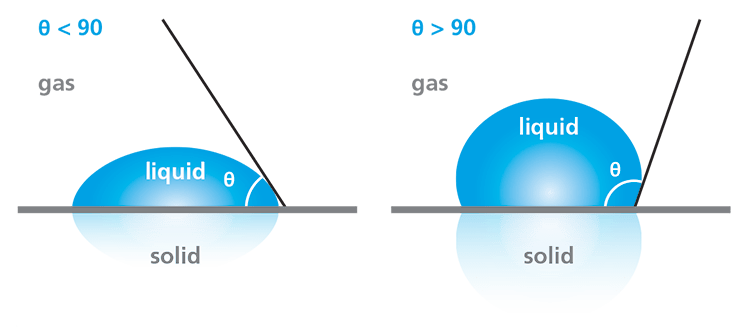
To create a hydrophobic or hydrophobic surface, two main factors will be needed, one is low surface tension or slippery and slippery surface, and the other is the hardness of the surface or having protrusions in nanometer sizes on the desired surface so that the water droplets are placed on the surface. Form an angle higher than 90 degrees with the surface and do not spread on the surface.